

Answers at a Glance
What is a temporomandibular disorder, and How is it treated?
Temporomandibular disorders (TMD) are problems of the jaw joint and surrounding muscles, with symptoms such as clicking sounds or pain when opening the mouth, difficulty opening wide, or the jaw locking out of place. At The Barunface, we check the condition of the joint bone with 3D CT and then prioritize conservative treatment such as an occlusal stabilization splint, a bruxism appliance, physical therapy, medication, and behavior correction. Jaw muscle Botox may be used alongside these. For those planning orthognathic (double jaw) surgery, a jaw joint evaluation is always done before surgery.
- Doctor in Charge
- Dr. Sang-Hoon Lee, Board-Certified Oral & Maxillofacial Surgeon
- Diagnosis
- Large FOV CBCT (3D CT) · Panoramic X-ray
- Anesthesia
- Local anesthesia · Conscious sedation · General anesthesia facilities
Board-Certified Oral & Maxillofacial Surgeon Dr. Sang-Hoon Lee Medically reviewed ·
Request a Consultation Consultation Prep Card10 Frequently Asked Questions
- First visit
- Interview · Palpation · 3D CT
- Main treatments
- Splint · teeth-grinding appliance · medication · physical therapy
- Wearing the appliance
- Mainly at night, 3–6 months
- Pain relief
- Several weeks to several months (varies by individual)
- Surgery
- Very rare
- Insurance
- Consultation covered by insurance · appliances non-covered
This content was reviewed by board-certified oral & maxillofacial surgeon Dr. Sang-Hoon Lee, Directorfor medical accuracy · Last reviewed
Recommended for You If
- Those who hear sounds from the jaw when opening the mouth or chewing
- If you have pain in the jaw, in front of the ears, or at the temples
- If your jaw feels stiff in the morning and you grind your teeth
- Those whose mouth opens only three fingers' width or less
- If you need to have your jaw joint checked before orthognathic (double jaw) surgery
Temporomandibular disorders, explained by Dr. Lee in videos
On the YouTube channel ‘안될 턱이 있나’, Dr. Sang-Hoon Lee answers questions he often hears in the consulting room. We have gathered only the videos related to TMJ disorders. Click to play them right here.
YouTube channel 안될 턱이 있나 These videos are published with patient consent. Results and recovery vary from person to person.
Do jaw joint sounds always need treatment?
If there is only a sound, without pain or limited mouth opening, monitoring is often enough. If pain, locking, or difficulty opening the mouth occurs together with it, treatment is needed.
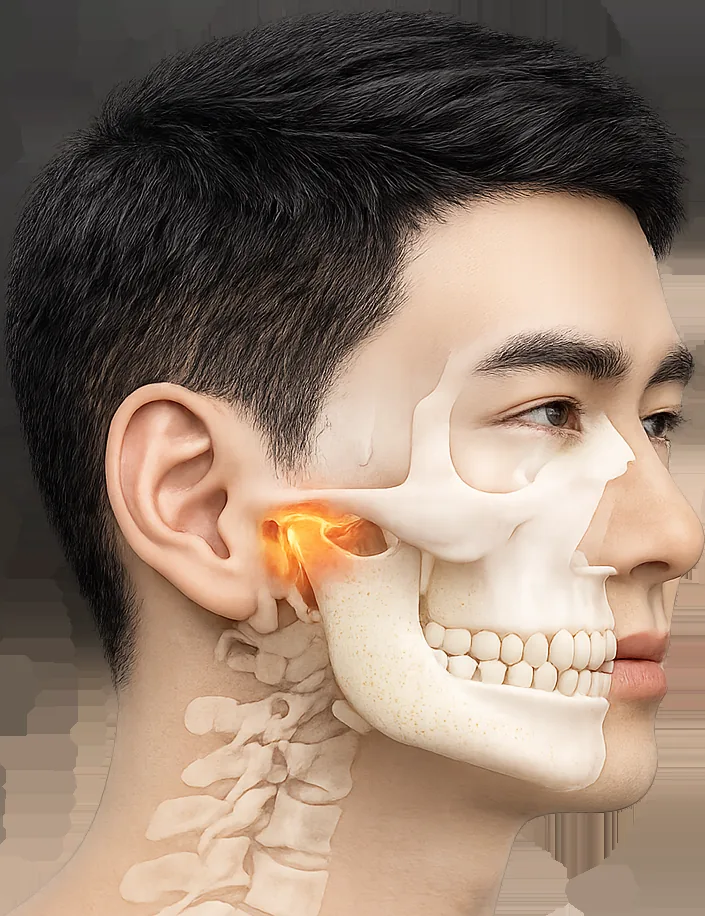
What is splint therapy?
A clear appliance worn over the teeth relaxes the jaw muscles and spreads out the force on the joint, helping reduce pain. It is usually worn at night and adjusted while progress is reviewed over 3–6 months. If you grind your teeth, a bruxism appliance also helps prevent tooth wear.
Can a jaw joint problem make my face asymmetrical?
If the bone of one jaw joint is resorbed, the jaw can shift toward that side, which may cause asymmetry or an open bite. In such cases, orthognathic (double jaw) surgery is considered after the joint has stabilized; while the condition is progressing, surgery is postponed.
When Dr. Lee Recommends Treatment
Whether to recommend treatment for a temporomandibular disorder is decided by diagnosis, not by photos or trends. Below are the criteria the director actually uses in consultations, in the director's own words.
Rather than operating on more patients, I wanted to listen fully to each person's story, think it through myself, and stay with them responsibly from surgery through recovery.
I try to be straightforward and plain: I explain why something can be done and why something cannot.
Tests and Preparation Before Your Consultation
The scope of treatment is decided by examination results. At your first visit, we review the items below, then explain which treatments are needed and which are not.
| Test | What We Look At |
|---|---|
| Panoramic X-ray · 3D CT | We check the tooth roots, jawbone, nerve canal, and surrounding structures. |
| Oral Examination | We directly examine your gum condition, tooth wear, and bite. |
| Medical History Review | We ask about any medications you take (blood thinners, osteoporosis medication, etc.) and any systemic conditions. |
What to Bring
- X-rays and CT scans from your previous dentist (if available)
- Names of medications you are taking — especially blood thinners, osteoporosis medication, and diabetes medication
- Systemic conditions · pregnancy status
- A note of the areas that bother you and when it started
- Notes on when sound or pain occurs as you open your mouth
How Your Care Proceeds
- 01

Diagnosis
Medical history · palpation · mouth opening measurement · 3D CT
- 02
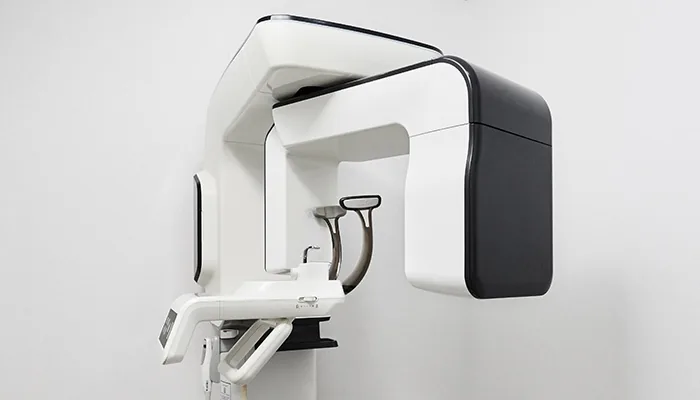
Conservative Treatment
Splint · medication · physical therapy · behavioral correction
- 03
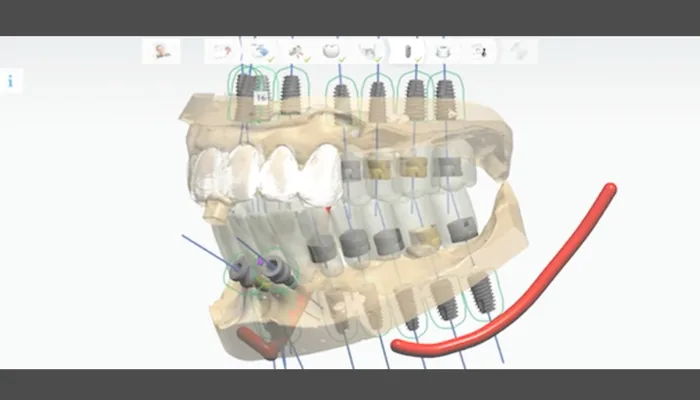
Follow-up
Appliance adjustment every 2–4 weeks
- 04
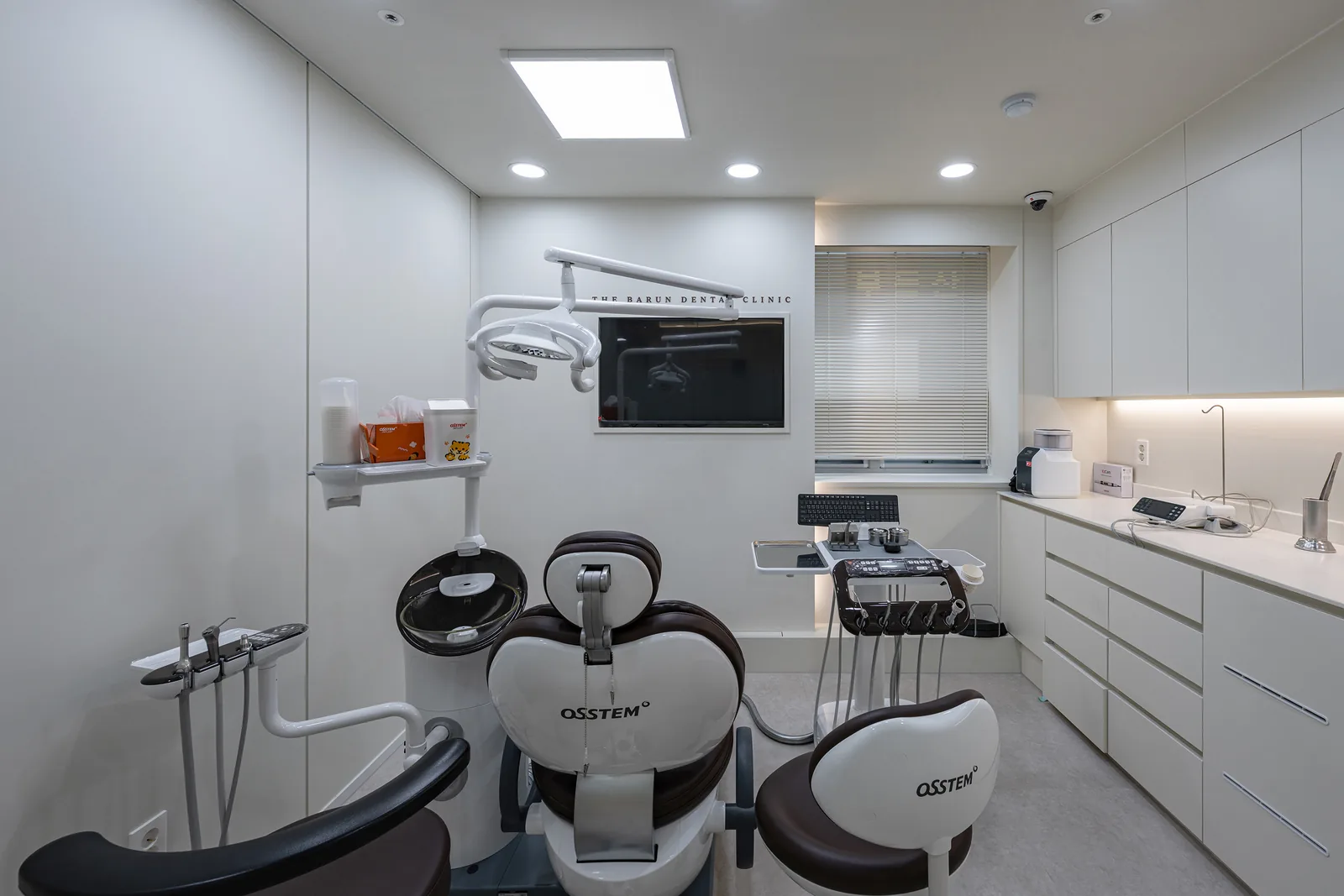
Additional treatment
Botox and joint space irrigation if needed
Temporomandibular disorder schedule and recovery at a glance
Basic information on treatment time, anesthesia, and recovery is summarized in the table. The actual schedule may vary depending on your diagnosis and individual condition, and will be explained again at your first visit.
| Item | Notice |
|---|---|
| First visit | Interview · Palpation · 3D CT |
| Main treatments | Splint · teeth-grinding appliance · medication · physical therapy |
| Wearing the appliance | Mainly at night, 3–6 months |
| Pain relief | Several weeks to several months (varies by individual) |
| Surgery | Very rare |
| Insurance | Consultation covered by insurance · appliances non-covered |
In the early stage of appliance therapy, you may notice a sense of bite awkwardness and increased saliva. Improvement of symptoms varies from person to person, and habit correction is also needed. All surgeries and procedures may involve side effects such as bleeding, swelling, bruising, sensory changes, infection, asymmetry, and the possibility of revision surgery, and results and recovery speed vary from person to person. Please be sure to tell us about any systemic conditions, medications you take, and pregnancy during your consultation.
The director who consults with you oversees your TMD care from start to finish
At The Barunface, consultation, diagnosis, treatment, and follow-up are all handled by one person: Dr. Sang-Hoon Lee, a board-certified oral & maxillofacial surgeon. We do not hand off stages to staff or other doctors.
Because the doctor who performs your treatment remembers the concerns you shared and the diagnosis from your first consultation, you can return directly to the doctor who first diagnosed you if any discomfort arises after treatment.
We tell you in advance, as fully as we can, what the process will involve, and we try to be with you as much as possible at the points where you are likely to find it most difficult.
Treatment Standards and Basis
- Doctor in Charge
- Dr. Sang-Hoon Lee, Board-Certified Oral & Maxillofacial Surgeon
- Diagnosis
- Large FOV CBCT (3D CT) · Panoramic X-ray
- Anesthesia
- Local anesthesia · Conscious sedation · General anesthesia facilities
TMJ disorder FAQ 10 questions
01How much does TMD treatment cost in Busan?
Based on The Barunface's non-covered fee schedule, a CR splint costs KRW 700,000 and a night guard costs KRW 700,000. Jaw joint examination and physical therapy are covered by national health insurance, while splints and night guards are not. Based on the fee schedule, a CR splint costs KRW 700,000 and a night guard costs KRW 700,000. The exact total will be provided in writing after diagnosis.
02What are the side effects of TMJ disorder treatment?
In the early stage of appliance therapy, you may notice a sense of bite awkwardness and increased saliva. Improvement of symptoms varies from person to person, and habit correction is also needed. All surgeries and procedures may involve side effects such as bleeding, swelling, bruising, sensory changes, infection, asymmetry, and the possibility of revision surgery, and results and recovery speed vary from person to person. Please be sure to tell us about any systemic conditions, medications you take, and pregnancy during your consultation.
03Which department treats jaw joint problems?
Oral and maxillofacial surgery is the specialty that treats the jaw joint. Our clinic handles everything from diagnosis to appliance therapy.
04How long do I wear a splint?
Usually worn at night, with progress reviewed over 3–6 months.
05Do you also perform jaw joint surgery?
Most cases improve with conservative treatment, and surgery is extremely rare. If needed, we coordinate with a higher-level hospital.
06Does Botox help?
If jaw muscle tension is severe, masseter Botox may help with pain and teeth grinding.
07What about the cost?
Consultation and physical therapy are covered by insurance; splints and teeth-grinding appliances are non-covered, at 700,000 KRW each.
08What if my jaw dislocates?
If you visit right away, we can put it back in place by hand. If it happens repeatedly, we will consider an appliance or additional treatment.
09Is it always checked before orthognathic (double jaw) surgery?
Yes. The condition of the joint affects surgical results and stability, so it is always evaluated.
10Is a night guard different from a splint?
They serve different purposes. A splint mainly stabilizes the jaw joint and muscles, while a teeth-grinding appliance mainly protects the teeth.
Costs and what to know before your visit
| Item | Fee |
|---|---|
| CR Splint | 7010,000 KRW |
| Teeth-grinding appliance | 7010,000 KRW |
Based on the non-covered fee schedule published by the director. The total cost varies depending on the extent of surgery, anesthesia, hospital stay, and tests. The exact cost will be provided after diagnosis.
Costs · Insurance
Jaw joint examination and physical therapy are covered by national health insurance, while splints and bruxism appliances are non-covered. Based on our fee schedule, a CR splint is KRW 700,000 and a bruxism appliance is KRW 700,000. View non-covered fee schedule
Side effects · Precautions
In the early stage of appliance therapy, you may notice a sense of bite awkwardness and increased saliva. Improvement of symptoms varies from person to person, and habit correction is also needed. All surgeries and procedures may involve side effects such as bleeding, swelling, bruising, sensory changes, infection, asymmetry, and the possibility of revision surgery, and results and recovery speed vary from person to person. Please be sure to tell us about any systemic conditions, medications you take, and pregnancy during your consultation.
This information complies with the Medical Service Act and medical advertising review standards, and treatment results and recovery may vary from person to person. Please make your decision only after consulting with a specialist.
Related treatments
This content was reviewed by board-certified oral & maxillofacial surgeon Dr. Sang-Hoon Lee, Directorfor medical accuracy · Last reviewed