

Answers at a Glance
What is implant insertion, and and who is it right for?
Implant insertion is a surgery in which a body-safe implant, such as silicone, is placed on top of the bone in areas that are sunken or lacking, such as the forehead, beside the front of the cheekbones (the “gwijok” area), and the chin, to add volume and reinforce contour. At The Barunface, we create 3D custom implants that follow the bone surface exactly based on 3D CT to reduce lifting and shifting, and for the chin, we first assess whether osteotomy, which moves your own bone, is more suitable than an implant.
- Operating Surgeon
- Board-certified oral & maxillofacial surgeon Dr. Sang-Hoon Lee (20+ years in oral & maxillofacial surgery, about 15 years focused on orthognathic and contouring surgery)
- Diagnosis · Planning
- Large FOV CBCT (3D CT), intraoral scanner, 3D VSP software, in-house 3D printing
- Anesthesia · Safety
- General anesthesia operating room · recovery room, anesthesiologist, BIS, respiratory and CO₂ monitoring, emergency equipment, UPS
Board-Certified Oral & Maxillofacial Surgeon Dr. Sang-Hoon Lee Medically reviewed ·
Request a Consultation Consultation Prep Card13 frequently asked questions
- Surgery Time
- Approx. 1 hour
- Anesthesia
- Sleep (sedation) anesthesia or general anesthesia
- Hospital Stay
- Same day or 1 day
- Suture Removal
- About 1–2 weeks
- Return to Daily Life
- Around 1 week
- Implants
- Ready-made · 3D custom
This content was reviewed by board-certified oral & maxillofacial surgeon Dr. Sang-Hoon Lee, Directorfor medical accuracy · Last reviewed
Recommended for You If
- For those whose forehead is flat or sunken, making the side profile look flat
- Those with a sunken area above the nasolabial folds (the "noble area") that makes them look older
- For those whose chin is slightly receded and whose bite is normal
- For those who want semi-permanent augmentation instead of repeated filler treatments
What makes a 3D custom implant different?
A ready-made implant has a fixed shape that is trimmed to fit the bone, whereas a 3D custom implant is made by tracing the bone surface from the patient's CT, so it fits more closely with less lifting and rotation. Left-right asymmetry is also reflected in the design.
For the chin, which is better: an implant or osteotomy?
If the chin needs only a small advancement and the bone shape is favorable, an implant is also an option. If length, width, and asymmetry are all being changed or the amount of movement is large, osteotomy is more suitable, and because implants may cause bone resorption or shifting over the long term, we explain this according to your condition.
Does an implant last a lifetime?
Medical-grade silicone is semi-permanent, but if infection, movement, bone resorption, or contracture occurs, it may need to be removed or replaced. Unlike fillers, surgery is required to reverse it.
When the Director Recommends Surgery
Whether to recommend implant surgery is decided by diagnosis, not by photos or trends. Below are the criteria Dr. Lee actually uses in consultations, recorded in the director's own words.
Contouring surgery is performed for aesthetic improvement rather than functional improvement, and it must be able to meet the patient's needs. That is why I always identify the patient's expectations accurately and judge whether contouring surgery can meet them.
The goals and direction the patient hopes to achieve through surgery must match the goals and direction of the surgeon performing it.
Tests and Preparation Before Your Consultation
Facial bone surgery is not decided by appearance alone. At your first consultation, we record how your bones, teeth, and face relate to one another using the tests below, and first judge from that data whether surgery is needed.
| Test | What We Look At |
|---|---|
| 3D CT (Large FOV CBCT) | We view the entire facial skeleton, along with the positions of nerves and tooth roots, in 3D. It can be taken on the day of your consultation. |
| Intraoral Scan · Dental Model | We digitally record how your upper and lower teeth fit together. |
| Facial Photos · Measurements | Using front, 45-degree, and side photos, we measure left-right differences and proportions. |
| 3D Virtual Surgical Planning (VSP) | On a 3D model that combines your CT, scans, photos, and models, Dr. Lee performs the surgery virtually first, and we review the expected changes together. |
What to Bring
- Referral from your orthodontist and orthodontic diagnosis records (if available)
- Previously taken CT, panoramic, and cephalometric images (records from other clinics are helpful too)
- Front and side-profile photos (to explain the changes you would like)
- Names of medications you are taking, systemic conditions, surgical history, and allergies
- Your school or vacation schedule, so we can plan surgery and recovery
How Your Care Proceeds
- 01
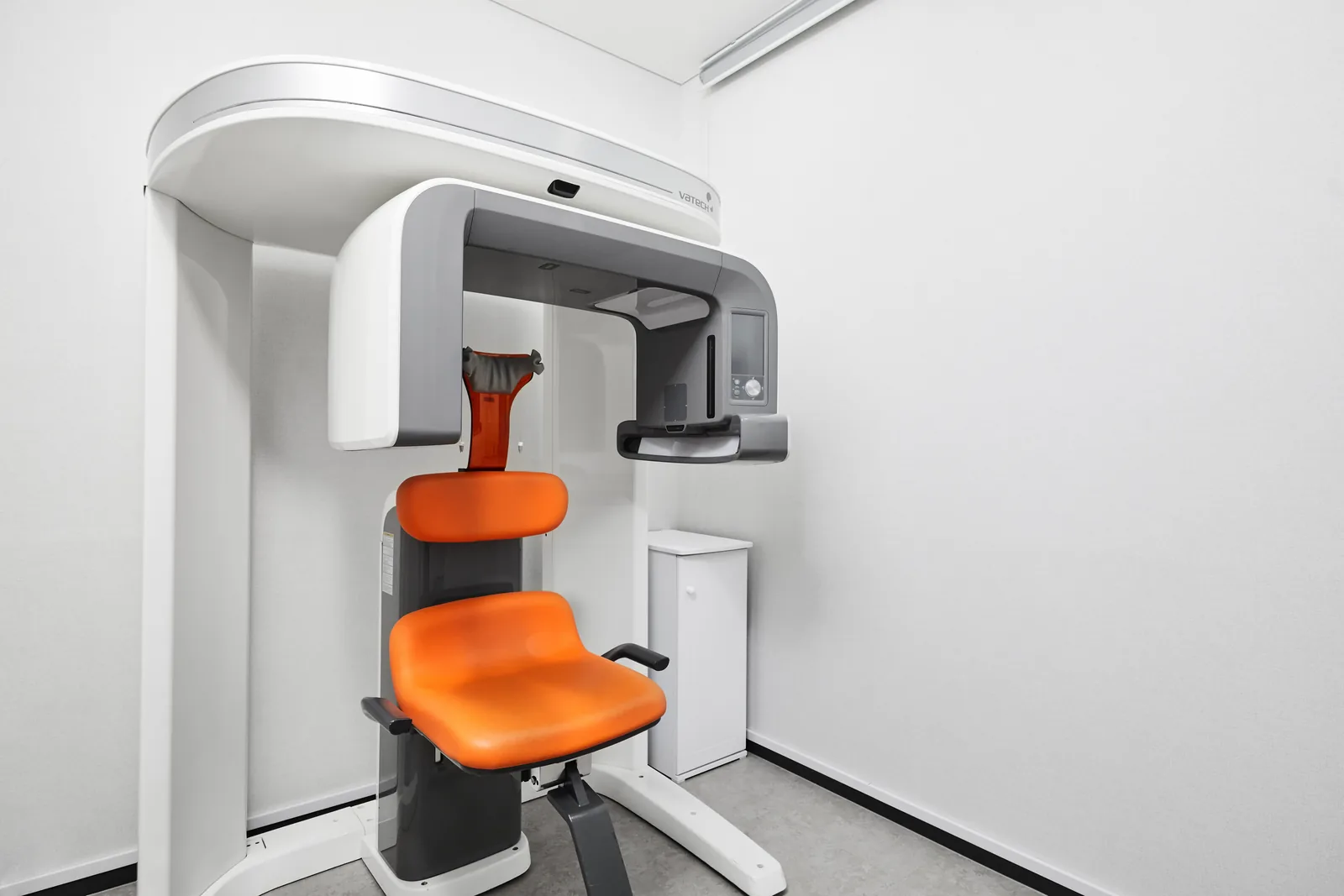
First Consultation · 3D CT Scan
We measure the skeleton, bite, airway, and asymmetry using facial photos, 3D CT, an intraoral scan, and dental models. We will honestly tell you, first of all, whether your face needs surgery.
- 02
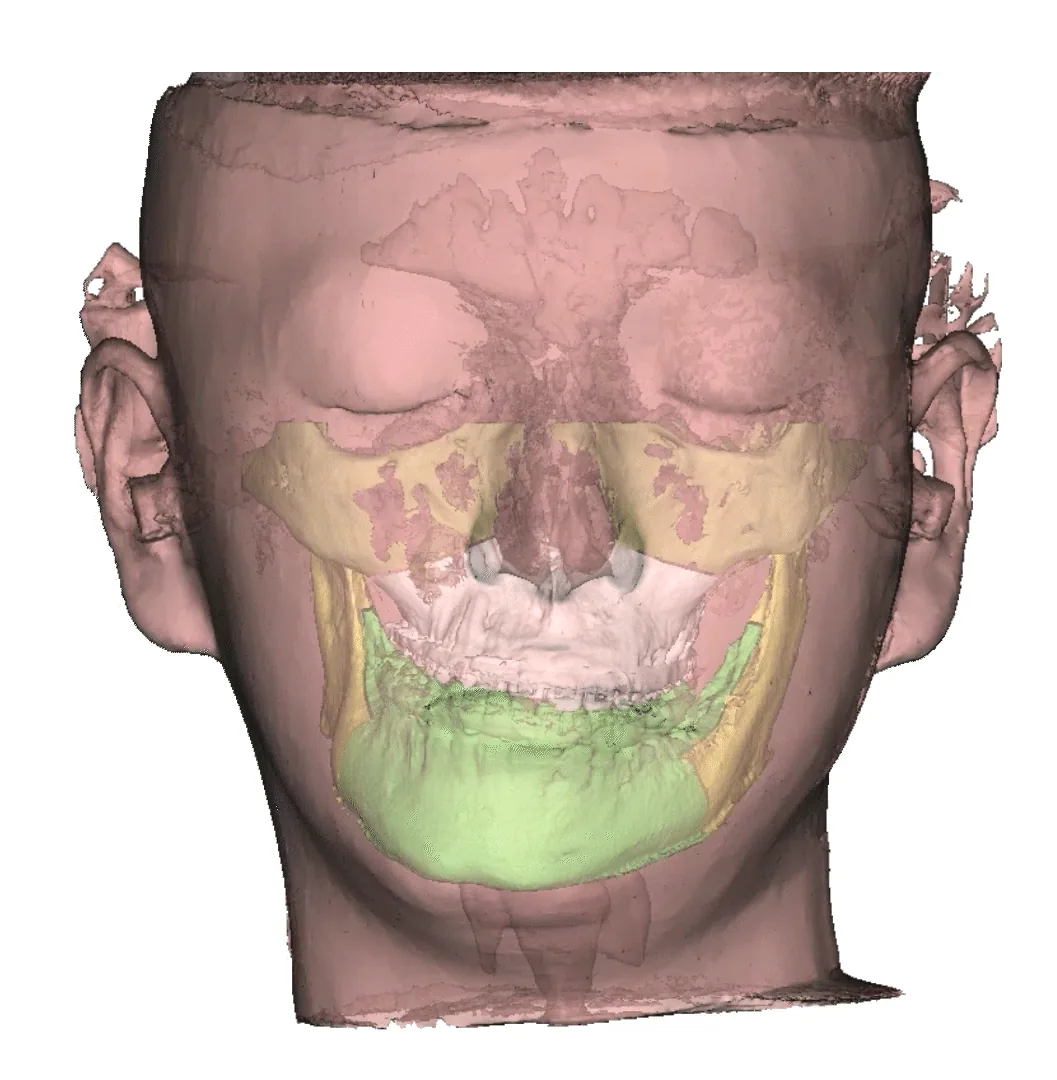
Virtual Surgical Planning (VSP)
Dr. Lee personally determines the amount and direction of jaw movement on the 3D model, and explains the expected facial changes with 3D images.
- 03
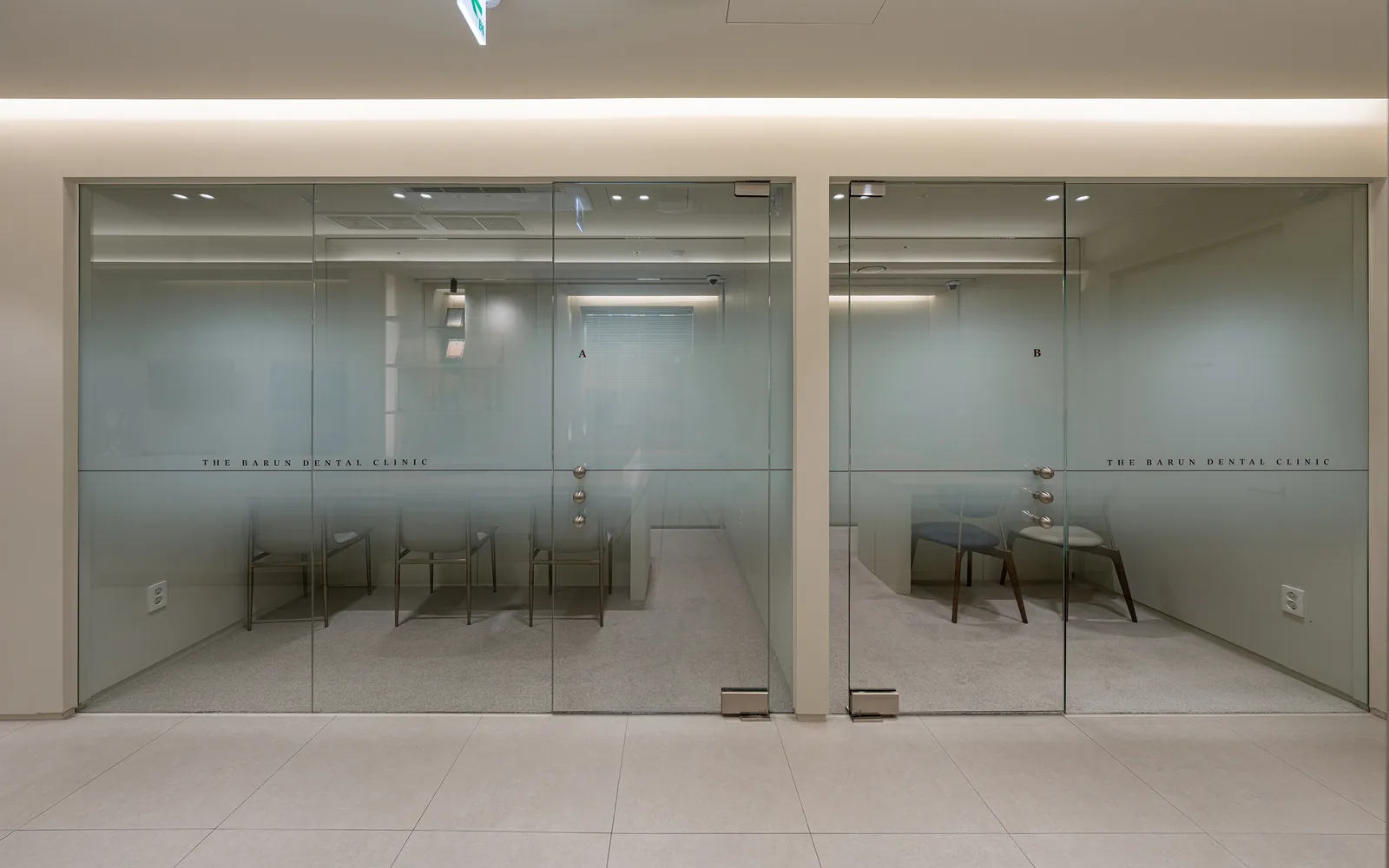
Pre-Surgery Tests · Collaboration with Orthodontics
We perform pre-anesthesia tests such as blood tests and an ECG, and coordinate the timing of surgery and bite goals with your orthodontist. The surgical guide (wafer) is 3D-printed in-house.
- 04
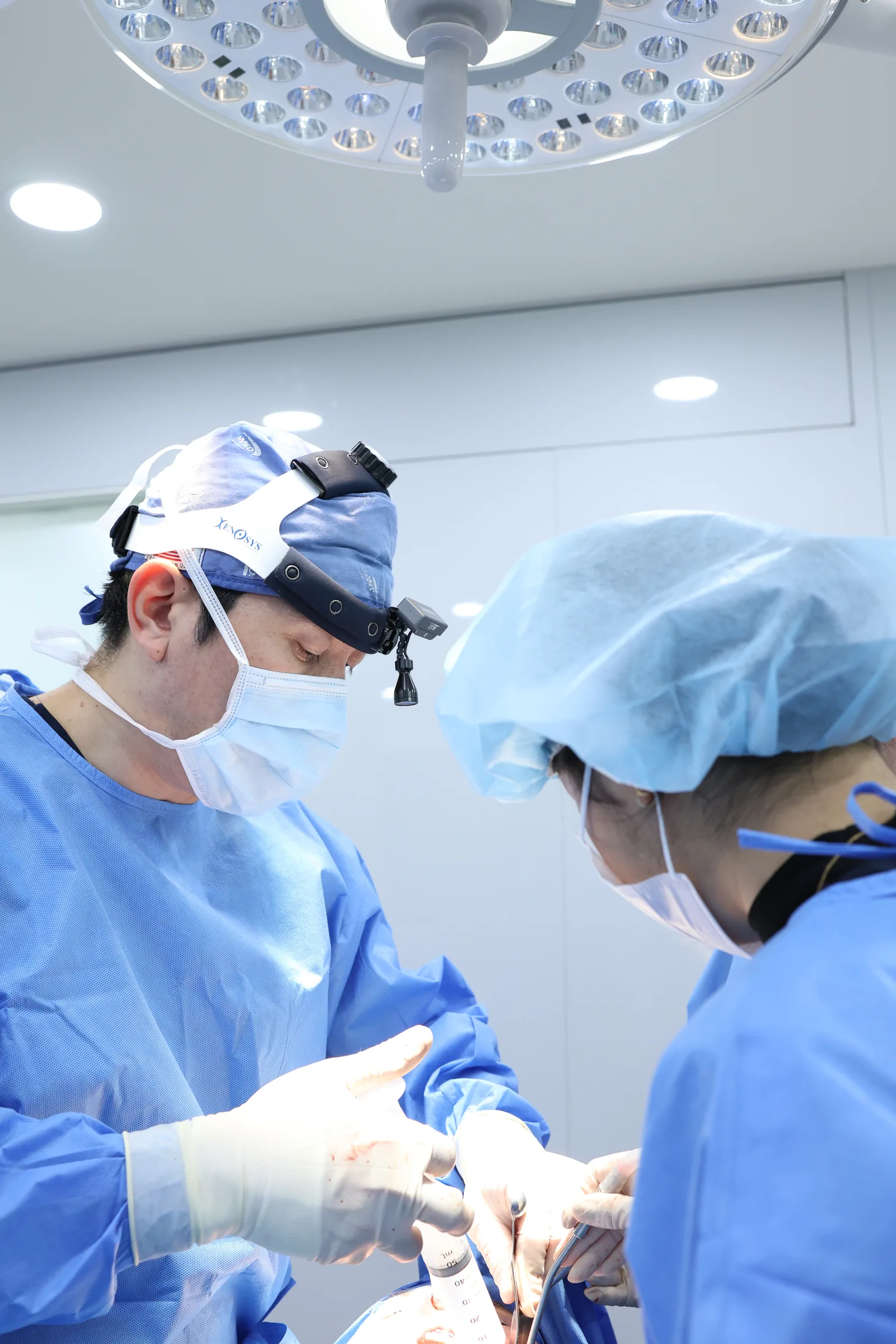
Surgery · Hospitalization
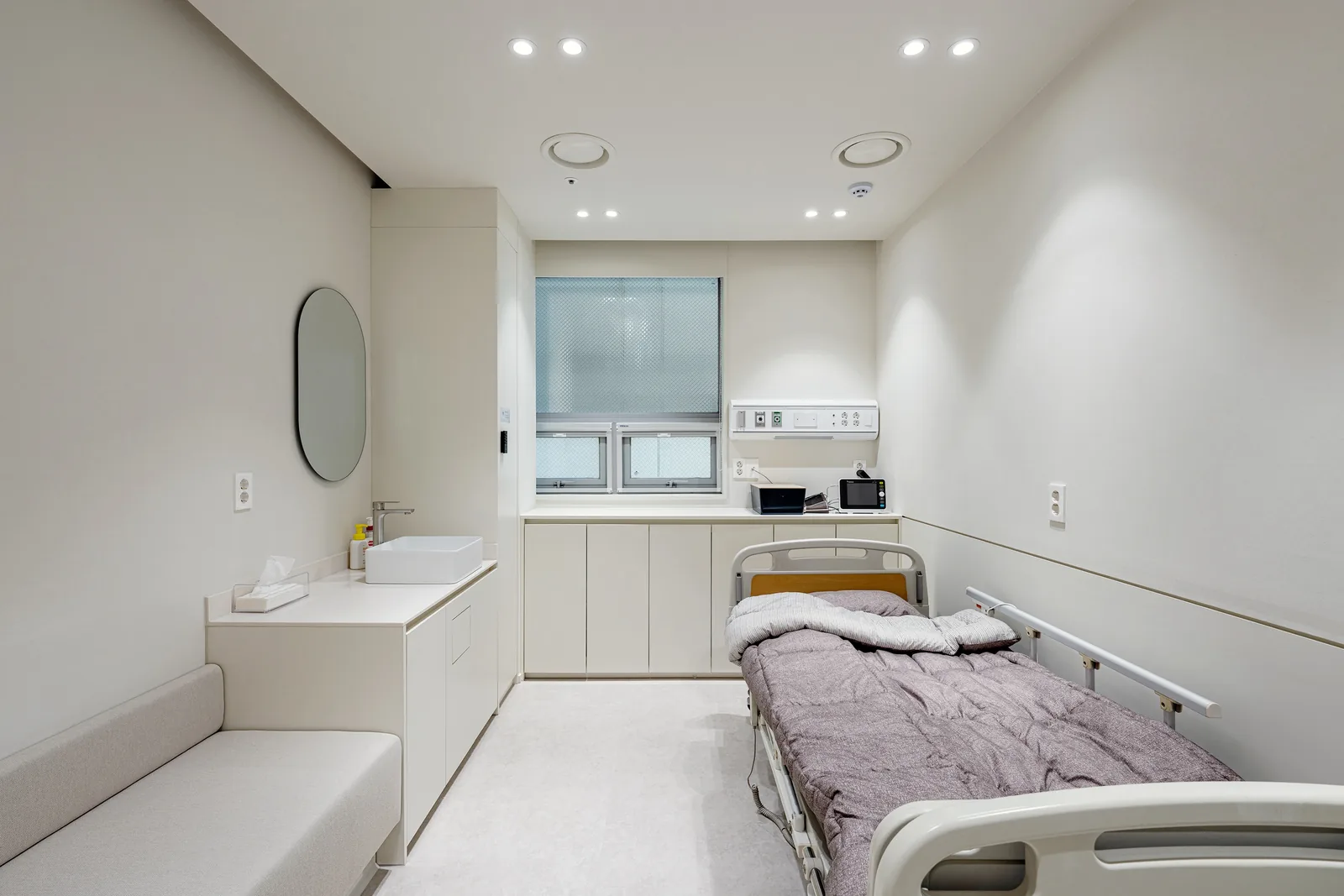
After 3–4 hours of surgery under general anesthesia, you pass through the recovery room and stay 1–3 days in a private room. A guardian may also stay by your side, within reasonable limits.
- 05
Follow-Up After Discharge
Dr. Lee personally checks in at 1 week, 2 weeks, 1 month, 3 months, 6 months, and 1 year. If needed, the fixation pins are removed after 6–12 months.
How Recovery and Aftercare Continue
Recovery after implant surgery generally proceeds in the order below. The timeline reflects an average course, and recovery speed varies from person to person.
| Timing | Condition and Care |
|---|---|
| Right after surgery – 3 days | Pain and swelling management during your hospital stay, ice packs, and keeping your upper body raised. Swelling-control injections and regenerative laser are applied depending on your condition. |
| 1 – 2 weeks | Liquid diet, oral rinsing, and light walks. Stitches are removed around the 2-week mark. This is when swelling visibly decreases. |
| 3 – 6 weeks | Gradually moving to soft foods and returning to daily life. Your orthodontist resumes post-surgery orthodontic treatment. |
| 3 months – 1 year | Residual swelling and sensation recover gradually. After the bone has firmly healed, the fixation plates are removed if needed. |
The director who consults with you oversees your implant insertion from start to finish
At The Barunface, one person, Dr. Sang-Hoon Lee, a board-certified oral & maxillofacial surgeon, handles the consultation, diagnosis, 3D surgical planning, surgery, inpatient rounds, and follow-up. We do not hand off stages to staff or other doctors.
Because the surgeon who performs your surgery remembers the concerns and diagnosis from your first consultation, you can ask the same person directly about questions that arise during recovery, such as swelling, sensation, and bite after surgery. Since we are located in Seomyeon, you do not have to make long trips for each follow-up visit.
Before the actual surgery, I perform the surgery on a computer first. I try it one way and another, and think it through carefully. In the past, I could only imagine the jaw position and facial appearance after surgery in my head, but now I can see it directly in 3D, which helps me a great deal and helps patients understand the surgery much more easily.
Treatment Standards and Basis
- Operating Surgeon
- Board-certified oral & maxillofacial surgeon Dr. Sang-Hoon Lee (20+ years in oral & maxillofacial surgery, about 15 years focused on orthognathic and contouring surgery)
- Diagnosis · Planning
- Large FOV CBCT (3D CT), intraoral scanner, 3D VSP software, in-house 3D printing
- Anesthesia · Safety
- General anesthesia operating room · recovery room, anesthesiologist, BIS, respiratory and CO₂ monitoring, emergency equipment, UPS
- Hospitalization · Recovery
- 4 private single-patient inpatient rooms on a separate floor, central patient monitoring, Smartlux · LDM · Shurink recovery programs
- Insurance
- Not covered by insurance (some coverage criteria, such as for congenital deformities, will be explained during consultation)
Frequently Asked Questions About Implant (Prosthesis) Insertion 13 questions
01How much does implant surgery cost in Busan?
Based on The Barunface's non-covered fee schedule, the forehead implant (3D custom) is KRW 3,500,000 (VAT not included), the gwijok implant is KRW 1,500,000 (VAT not included), and the chin implant (ready-made) is KRW 2,000,000 (VAT not included). Orthognathic (double jaw) surgery is a non-covered treatment. Surgery costs vary depending on the scope of surgery (double jaw, lower jaw, combined) and the anesthesia, hospitalization, and examination items, and are provided in writing after diagnosis. Reference prices can be found in the non-covered fee schedule on our website. The exact total is provided in writing after diagnosis.
02How long does recovery take after implant insertion?
Return to daily life is usually around 1 week. Immediately after surgery – Day 3: pain and swelling management during your hospital stay, ice packs, and keeping the upper body upright. Swelling-management injections and regenerative laser are applied depending on your condition. Weeks 1 – 2: liquid diet, oral hygiene, and light walks. Stitches are removed at around 2 weeks. This is when swelling visibly goes down. Weeks 3 – 6: gradually move up to soft foods and return to social life. Orthodontic treatment resumes with the orthodontics department after surgery. Months 3 – 1 year: residual swelling and sensation recover gradually. Once the bone has firmly healed, the fixation pins are removed if needed. Recovery speed varies from person to person.
03What are the side effects of implant insertion?
After orthognathic surgery, there may be reduced sensation in the lip and chin area (mostly recovering within several months, rarely persisting), bleeding, infection, swelling and bruising, jaw joint discomfort, changes in bite, plate-related problems, and the possibility of reoperation. There are also risks associated with general anesthesia. Results and recovery speed vary from person to person, so please make your decision carefully after receiving a thorough explanation before surgery. All surgeries and procedures may involve side effects such as bleeding, swelling, bruising, sensory abnormalities, infection, asymmetry, and the possibility of reoperation, and results and recovery speed vary by individual. Please be sure to tell us about any systemic conditions, medications you are taking, and pregnancy during your consultation.
04What are the anesthesia and hospital stay for implant insertion?
The procedure takes about 1 hour, with sedation or general anesthesia, and a hospital stay of either the same day or 1 day. At The Barunface, Dr. Sang-Hoon Lee, a board-certified oral & maxillofacial surgeon, treats patients personally.
05Can I have implant insertion in Busan instead of Seoul?
We do not claim that we are unconditionally better than a large hospital in Seoul. However, at The Barunface in Seomyeon, Busan, a board-certified oral & maxillofacial surgeon trained at Seoul National University Dental Hospital and Asan Medical Center in Seoul personally handles your consultation, 3D surgical planning, surgery, private-room recovery, and follow-up care. If a problem arises after surgery, you can check directly with your operating surgeon nearby. Stories from patients who considered Seoul but chose Busan are on the 'Orthognathic Surgery: Do I Need to Go to Seoul?' page.
06What about surgery time and anesthesia?
About 1 hour, with sedation or general anesthesia.
07What about scars?
The forehead implant is placed through an incision inside the scalp, and the noble-area and chin implants through an incision inside the mouth, so no incision is made in the facial skin.
08Can the implant be felt?
In areas with thin skin, the implant may be felt by touch. We reduce this by designing the thickness and edges to be thin.
09What about the cost?
Based on the fee schedule, the forehead implant (3D custom) is KRW 3,500,000, the noble-area implant is KRW 1,500,000, and the chin implant is KRW 2,000,000 for a ready-made type and KRW 3,000,000 for a 3D custom type (VAT not included).
10How does it compare with fillers?
Fillers can be done right away without surgery, but they must be repeated every 6–18 months. An implant lasts with a single surgery.
11What if an infection occurs?
If the infection does not improve with antibiotic treatment, the implant must be removed. Please follow the post-surgery care instructions.
12Do you also remove or replace implants from other clinics?
Yes. If removal or replacement is needed due to displacement, asymmetry, infection, or other reasons, we will discuss it with you at a consultation.
13What about recovery?
Swelling lasts 1–2 weeks, stitch removal is at 1–2 weeks, and return to daily life is around 1 week.
Costs and what to know before your visit
| Item | Fee |
|---|---|
| Forehead implant (3D custom) | 35010,000 KRW · VAT not included |
| Aristocrat-area implant | 15010,000 KRW · VAT not included |
| Chin Implant (Ready-Made) | 20010,000 KRW · VAT not included |
| Chin Implant (3D Custom) | 30010,000 KRW · VAT not included |
Based on the non-covered fee schedule published by the director. The total cost varies depending on the extent of surgery, anesthesia, hospital stay, and tests. The exact cost will be provided after diagnosis.
Costs · Insurance
Orthognathic surgery is a non-covered (not covered by national health insurance) treatment. The surgery fee varies depending on the scope of surgery (double jaw, lower jaw, combined) and the anesthesia, hospitalization, and examination items, and is provided in writing after diagnosis. You can check the standard amounts in the non-covered fee schedule on our website. View non-covered fee schedule
Side effects · Precautions
After orthognathic surgery, there may be reduced sensation in the lip and chin area (mostly recovering within several months, rarely persisting), bleeding, infection, swelling and bruising, jaw joint discomfort, changes in bite, plate-related problems, and the possibility of reoperation. There are also risks associated with general anesthesia. Results and recovery speed vary from person to person, so please make your decision carefully after receiving a thorough explanation before surgery. All surgeries and procedures may involve side effects such as bleeding, swelling, bruising, sensory abnormalities, infection, asymmetry, and the possibility of reoperation, and results and recovery speed vary by individual. Please be sure to tell us about any systemic conditions, medications you are taking, and pregnancy during your consultation.
This information complies with the Medical Service Act and medical advertising review standards, and treatment results and recovery may vary from person to person. Please make your decision only after consulting with a specialist.
Related treatments
This content was reviewed by board-certified oral & maxillofacial surgeon Dr. Sang-Hoon Lee, Directorfor medical accuracy · Last reviewed