

Answers at a Glance
What is an implant, and and who is it right for?
A dental implant restores chewing function and appearance by placing a titanium artificial root in the jawbone where a tooth is missing and attaching a prosthesis on top. At The Barunface, a board-certified oral & maxillofacial surgeon who operates on the jawbone checks bone volume and nerve position with 3D CT and an intraoral scan, then places the implant at a position planned with a digital guide (surgical guide). If there is not enough bone, a bone graft or sinus bone graft is done together, and patients who are afraid of surgery can have it done under sedation (sleep anesthesia).
- Operating Surgeon
- Dr. Sang-Hoon Lee, board-certified oral & maxillofacial surgeon · Member of the Korean Academy of Oral & Maxillofacial Implantology
- Diagnosis · Planning
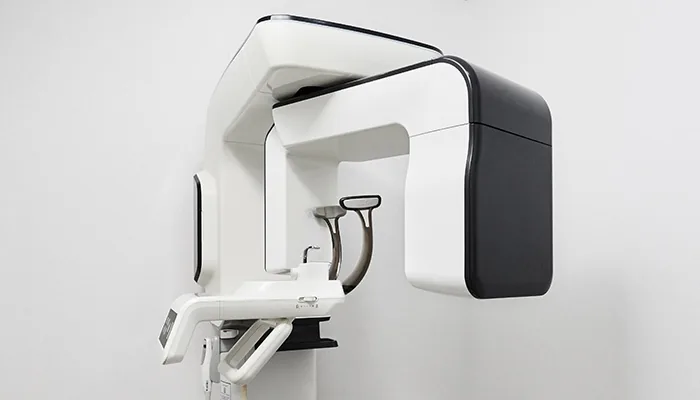
- Large FOV CBCT, intraoral scanner, digital guide (surgical guide)
- Products
- Osstem · DIO/Dentis · Straumann (fee schedule publicly available)
Board-Certified Oral & Maxillofacial Surgeon Dr. Sang-Hoon Lee Medically reviewed ·
Request a Consultation Consultation Prep Card24 Frequently Asked Questions
- Surgery Time
- About 30 min – 1 hr per implant
- Anesthesia
- Local anesthesia · sedation (sleep anesthesia) if needed
- Bone Healing Period
- Lower jaw 2–3 months · Upper jaw 3–6 months
- Total Duration
- 3–6 months (longer if bone grafting is needed)
- Warranty
- Implant 1–2 years · Prosthesis 1 year (varies by manufacturer)
- Insurance
- Age 65 and over: 2 implants covered by insurance; otherwise non-covered
This content was reviewed by board-certified oral & maxillofacial surgeon Dr. Sang-Hoon Lee, Directorfor medical accuracy · Last reviewed
Recommended for You If
- Those who have left the space of a missing tooth empty for a long time
- Those who find dentures uncomfortable and want fixed teeth
- Those who were told elsewhere that they do not have enough gum bone
- Those planning implants together with wisdom tooth extraction or jaw surgery
- Those with strong dental anxiety who want to be treated under sedation (sleep anesthesia)
What is the implant process like?
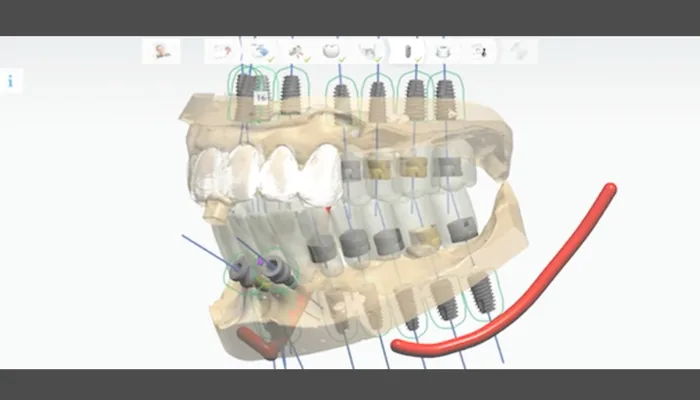
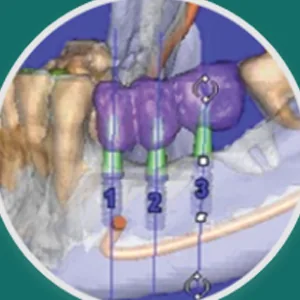
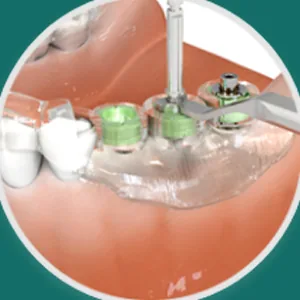
We check your bone condition with a 3D CT and an intraoral scan, plan the placement positions in advance on a computer (digital simulated surgery), and then place the artificial tooth root with a surgical guide in position. After 2–6 months, once the bone and implant have fused, the abutment and prosthesis (crown) are attached.
Why is a navigation (guided) implant necessary?
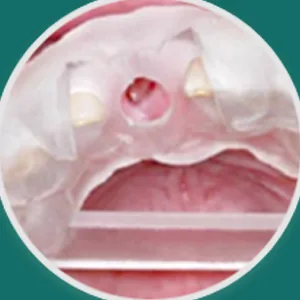
It allows the implant to be placed at the angle and position with the best bone, while avoiding the nerve canal, maxillary sinus, and the roots of neighboring teeth. In many cases a large gum incision is not needed, so there is less swelling and pain, and because the position of the prosthesis is calculated first, the direction of chewing force also improves.
I was told I don't have enough bone. Is an implant still possible?
In most cases, yes. If bone width or height is insufficient, we build up bone with a bone graft (GBR), or with a sinus lift (maxillary sinus bone graft) for the upper back teeth, and then place the implant. This is an area frequently handled in oral & maxillofacial surgery, which specializes in jawbone surgery.
The extent of bone grafting is divided into "simple" and "complex," and the fees are listed in the fee schedule. Time for the bone to mature after grafting is added, so the overall treatment period may be longer.
What implant products do you use?
We use Osstem, DIO·Dentis, and Straumann, selected according to bone condition, location, and cost. Fees and warranty periods for each product (implant 1–2 years, prosthesis 1 year) are published as-is in the non-covered fee schedule.
I'm afraid of surgery. Can I be asleep during it?
It can be done with conscious sedation (sleep anesthesia). Rather than general anesthesia, in which you lose consciousness completely, treatment is performed while medication reduces your tension and fear, and you will remember almost nothing of the procedure. We check your systemic conditions and medications in advance.
Do you also treat problems with implants placed at other clinics?
Yes. We replace prostheses, abutments, and screws on implants from other clinics, tighten loose screws, and repair resin holes. Fees are listed by item in the fee schedule. If peri-implantitis has progressed, we use CT to determine whether treatment is possible.
Implant · Bridge · Denture Comparison
| Implants | Bridge | Denture | |
|---|---|---|---|
| Adjacent Tooth Reduction | None | Yes (neighboring teeth on both sides are reduced) | No (clasps for partial dentures) |
| Chewing Force | Close to natural teeth | Good | Low |
| Treatment duration | 3–6 months | 1–2 weeks | 1–2 months |
| Surgery | Yes | None | None |
| Preserves gum bone | Helps preserve bone | Bone resorption at the missing tooth site | Bone resorption progresses |
| Lifespan | 10+ years with proper care | 7–10 years | 3–5 years (adjustment needed) |
When Dr. Lee Recommends Treatment
Whether to recommend an implant is decided by diagnosis, not by photos or trends. Below are the criteria Dr. Lee actually uses in consultations, in his own words.
Rather than operating on more patients, I wanted to listen fully to each person's story, think it through myself, and stay with them responsibly from surgery through recovery.
I try to be straightforward and plain: I explain why something can be done and why something cannot.
Tests and Preparation Before Your Consultation
The scope of treatment is decided by examination results. At your first visit, we review the items below, then explain which treatments are needed and which are not.
| Test | What We Look At |
|---|---|
| Panoramic X-ray · 3D CT | We check the tooth roots, jawbone, nerve canal, and surrounding structures. |
| Oral Examination | We directly examine your gum condition, tooth wear, and bite. |
| Medical History Review | We ask about any medications you take (blood thinners, osteoporosis medication, etc.) and any systemic conditions. |
What to Bring
- X-rays and CT scans from your previous dentist (if available)
- Names of medications you are taking — especially blood thinners, osteoporosis medication, and diabetes medication
- Systemic conditions · pregnancy status
- A note of the areas that bother you and when it started
- If you wear dentures or a bridge, please wear them when you come
How Your Care Proceeds
- 01
Diagnosis · 3D CT
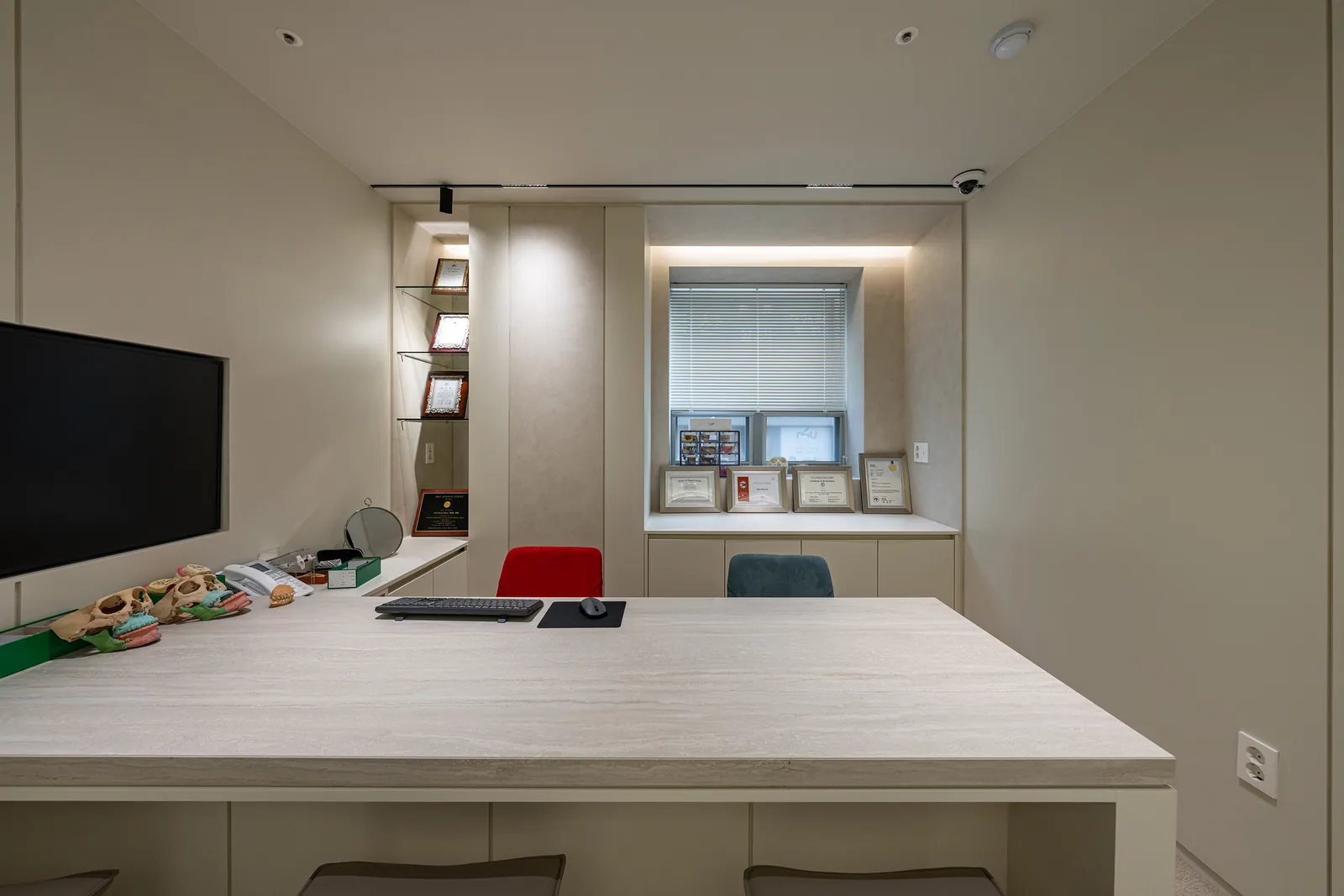
We check bone volume and quality, the positions of the nerve canal and maxillary sinus, and gum condition, and decide whether a bone graft is needed.
- 02
Digital Planning
We combine the intraoral scan and CT, determine the implant position working backward from where the prosthesis will sit, and make the surgical guide.
- 03
Implant Placement Surgery
Under local anesthesia (or sedation), the guide is put in place and the artificial root is placed. A bone graft is done together if needed.
- 04
Osseointegration Period
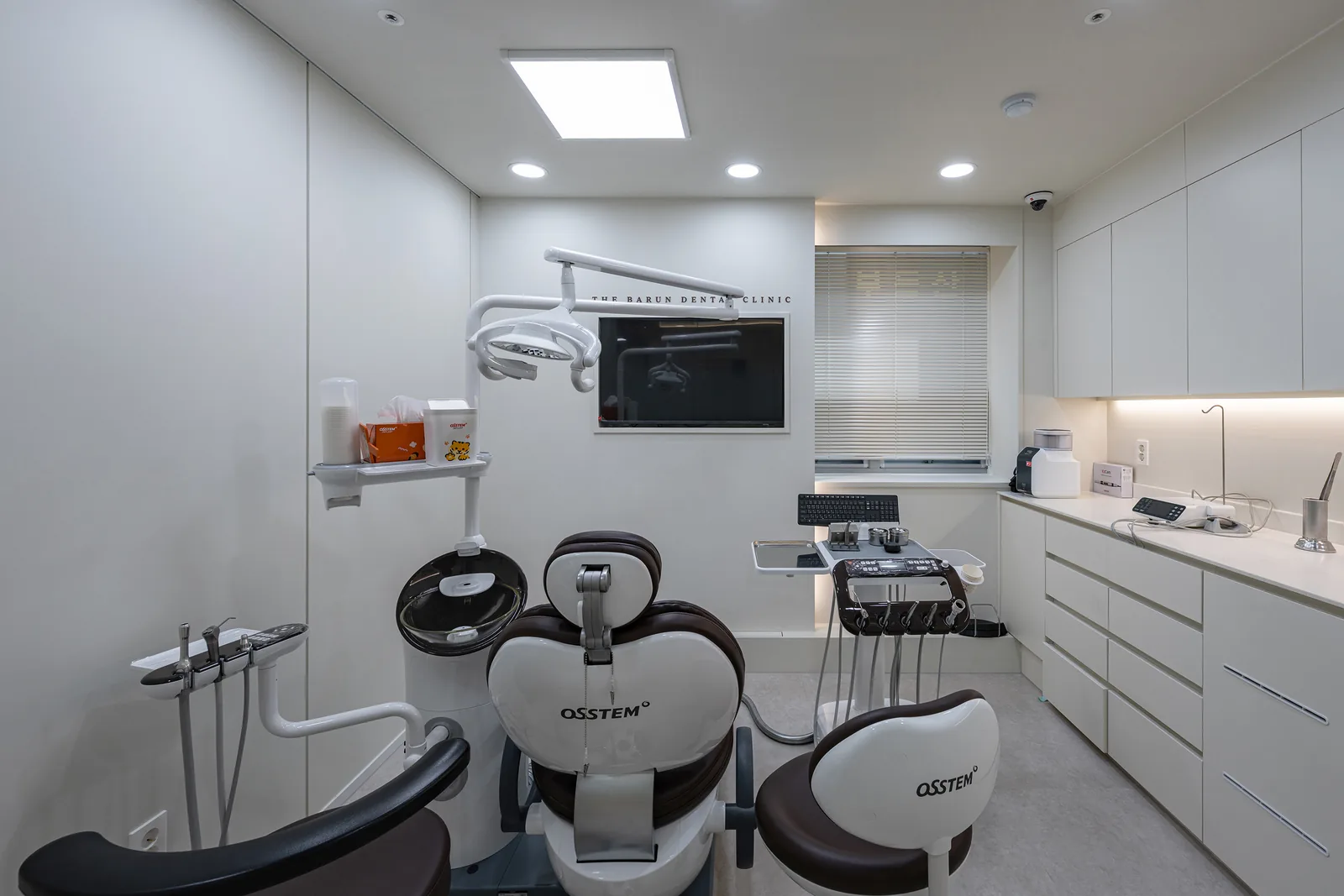
The bone and implant fuse over 2–3 months in the lower jaw and 3–6 months in the upper jaw. You can go about daily life with temporary teeth.
- 05
Prosthesis · Maintenance
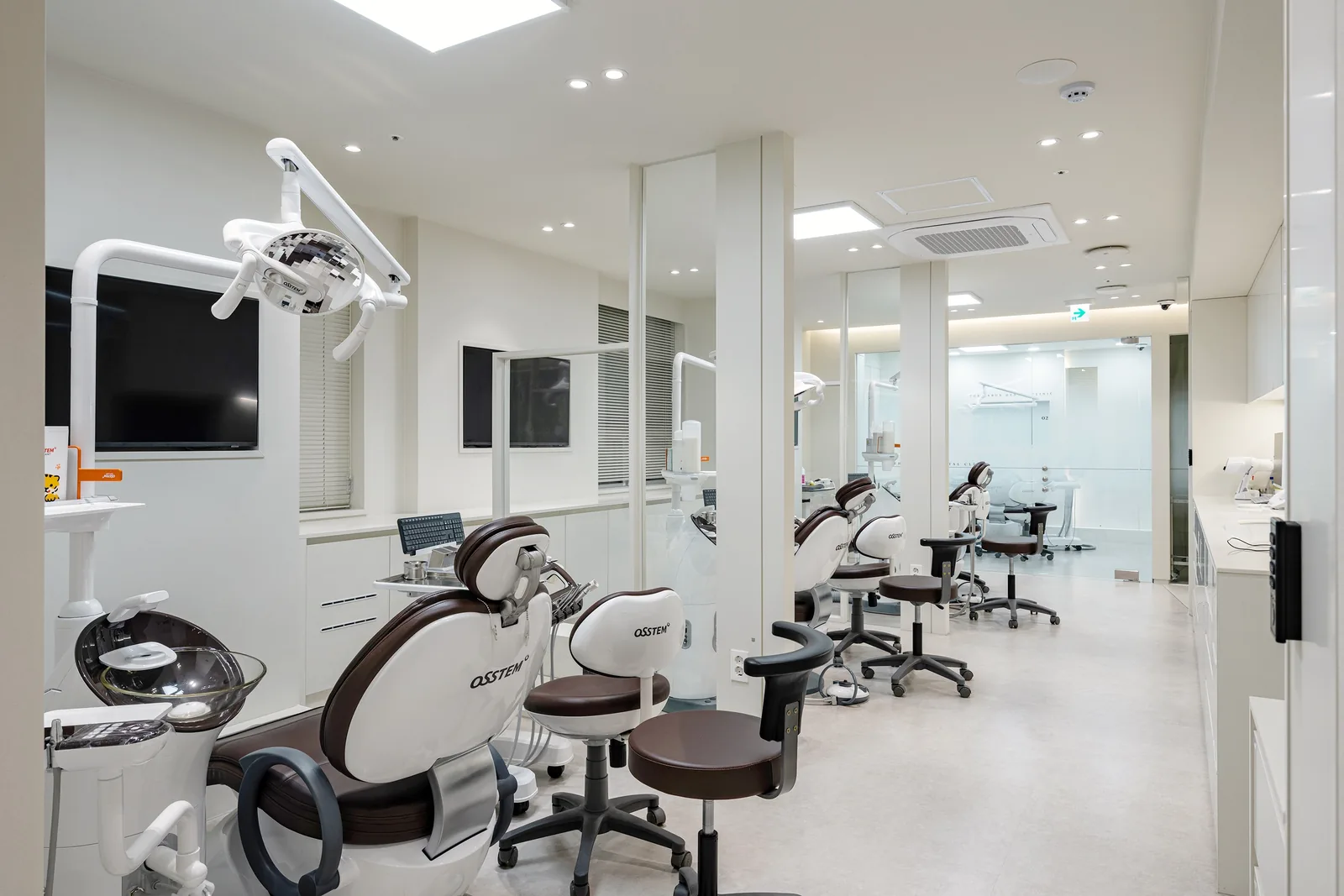
The abutment and crown are connected and the bite is adjusted. Afterward, we manage your implants with checkups and scaling every 6 months–1 year.
How Recovery and Aftercare Continue
Recovery after an implant generally follows the order below. The timeline reflects an average course, and recovery speed varies from person to person.
| Timing | Condition and Care |
|---|---|
| Day of surgery – Day 3 | Bite on gauze, apply ice packs, and eat soft foods on the side opposite the surgical site. Take prescribed medication. |
| 1 – 2 weeks | Stitches are removed. Brush the surgical area gently; no smoking or alcohol. |
| Osseointegration Period | Be careful with hard foods. Avoid excessive force when using a temporary tooth. |
| After the prosthesis | Regular checkups every 6 months–1 year, with interdental brush and water flosser care. If any problem arises within the warranty period, visit us right away. |
The Same Doctor Who Consults You Sees Your Implant from Start to Finish
At The Barunface, consultation, diagnosis, treatment, and follow-up are all handled by one person: Dr. Sang-Hoon Lee, a board-certified oral & maxillofacial surgeon. We do not hand off stages to staff or other doctors.
Because the doctor who performs your treatment remembers the concerns you shared and the diagnosis from your first consultation, you can return directly to the doctor who first diagnosed you if any discomfort arises after treatment.
We tell you in advance, as fully as we can, what the process will involve, and we try to be with you as much as possible at the points where you are likely to find it most difficult.
Treatment Standards and Basis
- Operating Surgeon
- Dr. Sang-Hoon Lee, board-certified oral & maxillofacial surgeon · Member of the Korean Academy of Oral & Maxillofacial Implantology
- Diagnosis · Planning
- Large FOV CBCT, intraoral scanner, digital guide (surgical guide)
- Products
- Osstem · DIO/Dentis · Straumann (fee schedule publicly available)
- Anesthesia
- Local anesthesia · conscious sedation (sleep anesthesia) · general anesthesia facilities available when needed
- Insurance
- National health insurance covers up to 2 teeth per lifetime for patients aged 65 and over; otherwise non-covered
Dental Implant FAQ 24 questions
01How much do implants cost in Busan?
Based on The Barunface's non-covered fee schedule, an implant (Osstem) is 1,090,000 KRW, an implant (Dio·Dentis) is 980,000 KRW, and an implant (Straumann) is 2,000,000 KRW. National health insurance covers up to 2 implants for patients aged 65 and over; otherwise implants are non-covered. Based on our clinic's fee schedule, Osstem is 1,090,000 KRW, Dio·Dentis is 980,000 KRW, and Straumann is 2,000,000 KRW; bone grafts, digital guides, and sedation are separate. The exact cost will be provided after diagnosis. The exact total will be provided in writing after diagnosis.
02How long is the recovery period after an implant?
Day of surgery – Day 3: Bite on gauze, apply ice packs, and eat soft food on the side opposite the surgical site. Take prescribed medication. Weeks 1–2: Stitches are removed. Brush gently around the surgical site, and avoid smoking and alcohol. Osseointegration period: Be careful with hard foods. Do not apply excessive force when using temporary teeth. After the prosthesis: Regular checkups every 6 months–1 year, and care with interdental brushes and a water flosser. If any problem occurs within the warranty period, visit the clinic right away. Recovery speed varies from person to person.
03What are the side effects of implants?
After implant surgery, bleeding, swelling, infection, abnormal sensation due to nerve damage, sinus inflammation, failure of osseointegration, peri-implantitis, and prosthesis fracture may occur. Smoking, diabetes, and osteoporosis medication can affect the success rate, so please let us know during your consultation. All surgeries and procedures may involve side effects such as bleeding, swelling, bruising, abnormal sensation, infection, asymmetry, and the possibility of revision surgery, and results and recovery speed vary from person to person. Please be sure to tell us about any general medical conditions, medications you are taking, and pregnancy during your consultation.
04What are the anesthesia and procedure time for implants?
The procedure takes about 30 minutes to 1 hour per implant, and anesthesia is local anesthesia, with sedation (sleep anesthesia) if needed. At The Barunface, Dr. Sang-Hoon Lee, a board-certified oral & maxillofacial surgeon, treats patients personally.
05How long does implant treatment take?
It takes about 2–3 months for the lower jaw and 3–6 months for the upper jaw, and if a bone graft is done, it may take an additional 3–6 months.
06Is the surgery painful?
The surgery is done under local anesthesia, so there is almost no pain during the procedure. Discomfort for 2–3 days after surgery is controlled with prescribed medication. If you have strong fear, we recommend sedation (sleep anesthesia).
07Do I have to get a bone graft?
It is not needed if the bone width and height are sufficient. If they are insufficient, placing an implant without a bone graft reduces long-term stability, so we decide with CT and advise you accordingly.
08What is a sinus lift?
A sinus lift is a surgery that raises the floor of the maxillary sinus (the empty space above the upper molars) and places bone graft material to secure enough bone height for an implant. It is frequently performed in oral & maxillofacial surgery.
09Is same-day implant placement (immediate placement after extraction) possible?
If there is no infection and there is enough bone, the implant can be placed at the same time as the extraction. If the infection is severe, a healing period is allowed after extraction.
10How long do implants last?
Many implants last more than 10 years, depending on care. Regular check-ups, scaling, and not smoking largely determine their lifespan.
11What is the warranty period?
The warranty is 2 years for Straumann implant fixtures, 1 year for Osstem, DIO, and Dentis fixtures, and 1 year for prosthetics. If an implant fails within 1 year, it is placed again and you pay only the bone graft cost. Conditions excluded from the warranty will be explained during your consultation.
12How does insurance coverage work?
For patients aged 65 and over, up to 2 implants per lifetime are covered by national health insurance with a 30% copayment. Bone grafts and sedation are not covered by insurance.
13Can I get an implant if I have diabetes or high blood pressure?
Yes, if your condition is well controlled. If you tell us in advance about the medications you take (especially anticoagulants and osteoporosis medications), we will plan your treatment in consultation with your physician.
14Do implants fail in smokers?
Smoking increases the risk of failed osseointegration and peri-implantitis. We recommend not smoking for at least 2 weeks before and after surgery, and quitting altogether if possible.
15What is peri-implantitis?
It is an inflammation of the gums and bone around an implant. In the early stage it is treated with scaling and disinfection; as it progresses, surgical treatment is needed, and in severe cases the implant must be removed.
16The implant prosthesis from another clinic broke. Can it be repaired?
Yes. Fees are published in our fee schedule, such as 500,000 KRW for a prosthesis replacement and 700,000 KRW for a prosthesis and abutment replacement. Depending on the product, parts may be difficult to match.
17When is a temporary tooth placed?
For aesthetic areas such as the front teeth, a temporary tooth can be placed on the day of implant placement or after the stitches are removed. For molars, the final prosthesis is sometimes placed directly after osseointegration.
18Can I have an MRI after getting an implant?
Titanium does not interfere with MRI scans.
19Can I get implants if I have no teeth at all?
Yes. There are methods that use just a few implants to support a fixed prosthesis or a denture. We plan according to the condition of your bone.
20How much does a digital guide cost?
According to the fee schedule, it is 300,000 KRW per jaw. We recommend it especially when many implants are being placed or when the nerve canal is close.
21Who is sedation implant surgery recommended for?
We recommend it for patients with significant dental anxiety, a strong gag reflex, or those having several implants placed at once. According to the fee schedule, it is 300,000 KRW, and a guardian must accompany you on the day.
22What about eating after surgery?
On the day of surgery, we recommend soft, cold foods; chewing on the opposite side for about 1 week; and, if a bone graft was done, soft foods for 2–4 weeks.
23Can I chew right after the implant is placed?
You should not apply force before osseointegration is complete. Please think of the temporary tooth as being for appearance only.
24How do I care for my implants?
Just like natural teeth: brush 2–3 times a day, use interdental brushes and a water flosser, and have a check-up and scaling every 6 months to 1 year.
Costs and what to know before your visit
| Item | Fee |
|---|---|
| Implant (Osstem) | 10910,000 KRW |
| Implant (DIO·Dentis) | 9810,000 KRW |
| Implant (Straumann) | 20010,000 KRW |
| Bone Graft (Simple) | 3010,000 KRW |
| Bone Graft (Complex) | 5010,000 KRW |
| Bone Graft (Sinus Lift) | 10010,000 KRW |
| Digital Guide (per jaw) | 3010,000 KRW |
| Temporary Tooth | 1010,000 KRW |
| PRP (autologous blood) · per site | 1010,000 KRW |
Based on the non-covered fee schedule published by the director. The total cost varies depending on the extent of surgery, anesthesia, hospital stay, and tests. The exact cost will be provided after diagnosis.
Costs · Insurance
National health insurance covers up to 2 implants for patients aged 65 and over; otherwise implants are non-covered. Based on our clinic's fee schedule, Osstem is 1,090,000 KRW, Dio·Dentis is 980,000 KRW, and Straumann is 2,000,000 KRW; bone grafts, digital guides, and sedation are separate. The exact cost will be provided after diagnosis. View non-covered fee schedule
Side effects · Precautions
After implant surgery, bleeding, swelling, infection, abnormal sensation due to nerve damage, sinus inflammation, failure of osseointegration, peri-implantitis, and prosthesis fracture may occur. Smoking, diabetes, and osteoporosis medication can affect the success rate, so please let us know during your consultation. All surgeries and procedures may involve side effects such as bleeding, swelling, bruising, abnormal sensation, infection, asymmetry, and the possibility of revision surgery, and results and recovery speed vary from person to person. Please be sure to tell us about any general medical conditions, medications you are taking, and pregnancy during your consultation.
This information complies with the Medical Service Act and medical advertising review standards, and treatment results and recovery may vary from person to person. Please make your decision only after consulting with a specialist.
Related treatments
This content was reviewed by board-certified oral & maxillofacial surgeon Dr. Sang-Hoon Lee, Directorfor medical accuracy · Last reviewed